Welcome to your Upstate SC Real Estate Resource!

This blog will offer a mix of our newest listings to come onto the market as well as some client testimonials. Here you will also find some useful resources on buying and selling a home in the Upstate of South Carolina and Western North Carolina. 

If you see a home that looks interesting or if you have any questions regarding all aspects of the Real Estate market please feel free to contact us! - Peggy


Aug. 7, 2026

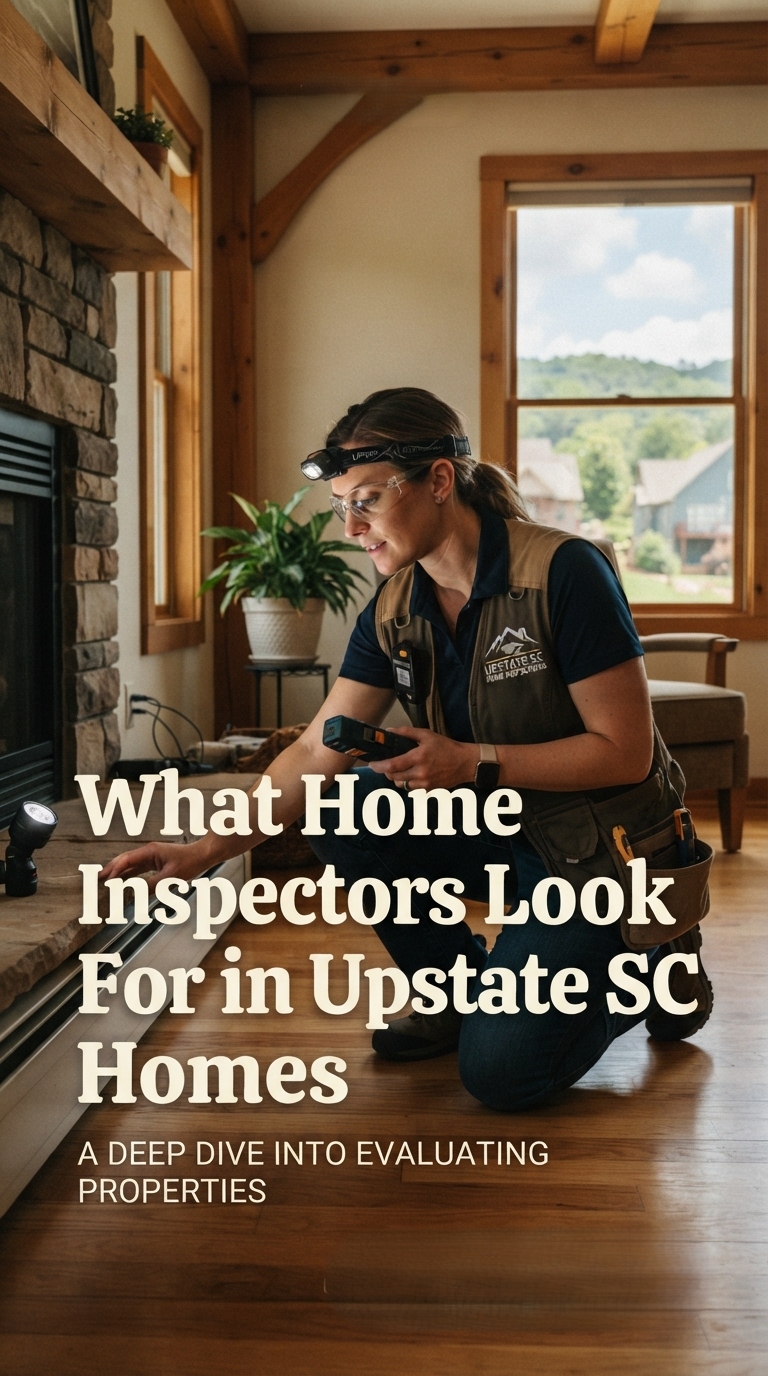
What Home Inspectors Look For in Upstate SC Homes

You're under contract on a home. The inspector shows up tomorrow. You want to know what he's actually going to check, what matters most, and what could kill the deal. Here's the real answer, from someone who's watched hundreds of these play out across the Upstate.

Home inspections in the Upstate follow a standard playbook. The inspector walks the house, climbs on the roof, crawls under the crawlspace, tests the systems, and writes it up. What varies is what actually matters at the end — the stuff that makes buyers renegotiate or walk away versus the stuff you can ignore.

Foundation and Structure

This is the first thing that matters. Inspectors check the foundation for cracks, shifting, and water intrusion. They look at the crawlspace or basement for moisture, mold, and any sign the house is settling in ways it shouldn't.

The Upstate has specific concerns here. Clay soils shift more than sandy soils. Older brick foundations can crack. Newer poured foundations are usually solid but can still show issues if drainage was poor during the build.

If the inspector flags a foundation issue, don't panic yet. Some cracks are cosmetic. Some are a big deal. Get a structural engineer to weigh in before you walk. It's a few hundred dollars and it tells you what you're actually dealing with.

Roof, Attic, and Gutters

Roofs in the Upstate take a beating from sun and summer storms. Inspectors check the shingles, flashing, and any visible wear. They walk the attic to check the framing, insulation, and any sign of leaks.

The big question is age. A 20-year architectural shingle roof at year 18 is going to need replacing soon. Ask the inspector how much life they think it has left. Then use that number when you're negotiating.

Gutters matter more than people think. Blocked gutters push water back against the fascia, then into the wall. Inspectors flag this because the damage is expensive to fix.
What Home Inspectors Look For in Upstate SC Homes

HVAC

Heating and cooling in the Upstate has to handle real summer heat and real winter cold. Inspectors test the system, look at the age of the unit, and check for maintenance history.

Systems typically last 12 to 18 years. If you're buying a house with a 15-year-old HVAC system, plan for replacement in the next few years. Budget accordingly.

Ductwork matters too. Some Upstate homes have leaky ductwork that's driving up energy bills. Inspectors will flag visible leaks. A full energy audit is a separate service.

Electrical

Older Upstate homes sometimes still have knob-and-tube wiring, aluminum wiring, or panels from the 60s and 70s that don't meet modern code. Inspectors flag any of this. Insurance companies care too.

If you're buying an older home, expect some electrical updates. Sometimes they're minor. Sometimes the whole panel needs to be replaced. Get quotes before closing so you know what you're walking into.

Plumbing

Inspectors run every faucet, flush every toilet, and check under every sink. They look at the water heater, the main line coming in, and any visible plumbing.

Common Upstate issues include galvanized pipes in older homes (they corrode from the inside), polybutylene (banned decades ago but still in some 80s-era homes), and cast iron drain lines (they fail over time). If any of these show up, plan for replacement work.

Wells and Septic

Many Upstate homes outside city limits run on wells and septic. If your property does, the inspection gets more involved.

Anderson rural areas, Chesnee properties, and much of the surrounding Spartanburg county land use one or both. Get the well tested for flow rate, bacteria, and contaminants. Get the septic pumped and inspected — not just visually checked. These two together can cost you a few hundred extra dollars during the inspection period, and they're worth every penny.

Windows, Doors, and Insulation

Inspectors check for drafts, seals, and single-pane windows that are past their prime. This isn't usually a deal-killer, but it affects energy bills. Older Upstate homes with original single-pane windows can leak enough air to add real money to your monthly utility costs.

Pests and Termites

The Upstate has termites. Every buyer should get a termite inspection separate from the standard home inspection. In South Carolina it's called a CL-100, and most lenders require it. Termites, dry rot, and moisture damage all show up on this report.

Frequently Asked Questions

How long does a home inspection take?

Most inspections in the Upstate take three to four hours for an average-sized home. Larger homes or homes with unusual features can take longer. Plan to be there for at least part of it — following the inspector around teaches you a lot about the home.

Should I attend the inspection?

Yes. You don't have to be there the whole time, but showing up at the end for the walkthrough is critical. The inspector will show you every issue he found and explain what matters most. That conversation is worth more than the written report.

What happens if the inspector finds problems?

You have a few options. Renegotiate the price. Ask the seller to fix the issue before closing. Ask for a credit at closing. Or walk from the deal. Which one makes sense depends on the issue, the size of the problem, and how motivated the seller is.

How much does a home inspection cost in the Upstate?

Standard home inspections in the Upstate run $350 to $600 depending on the size of the home and the inspector. Add-ons like well, septic, pool, and radon testing cost extra. Budget $500 to $1,200 total if the property needs the full workup.

Can I skip the inspection to make my offer stronger?

Some buyers waive inspections in competitive markets. I don't recommend it. The savings are small compared to the risk of finding out about a $20,000 problem after you close. If you need to strengthen your offer, look at shortening the inspection period or improving your terms elsewhere.

About Greg Harrelson

CENTURY 21 Blackwell is proudly part of the Century 21 Harrelson Group family of offices led by Greg Harrelson, a powerhouse organization with more than 30 years of success across South Carolina. This partnership strengthens our reach while preserving what built our reputation: exceptional service, best-in-class marketing, and highly trained agents focused on protecting our clients' most important investments.

Greg Harrelson is a seasoned Realtor with more than 30 years of experience serving the Myrtle Beach and Grand Strand markets branching into North Carolina more recently. As the founder of Century 21 The Harrelson Group, Greg has built his career helping buyers, sellers, and investors achieve success in every corner of the coastal Carolina real estate market. His expertise spans residential homes, investment properties, land development, and coastal condos. Known for his deep local knowledge, innovative marketing strategies, and commitment to personal service, Greg consistently helps clients reach their real estate goals while navigating the ever-changing market with confidence and precision.
Aug. 6, 2026

How to Price Your Upstate SC Home to Sell

Pricing your home is the one decision that makes or breaks your sale. Get it right and you'll have showings the first weekend. Get it wrong and your house sits, the price drops, and buyers start wondering what's wrong with it.

Here's the thing. Most sellers think pricing is about what they want to walk away with. It's not. It's about what a buyer will pay right now, in your neighborhood, for a home like yours. That number doesn't care about your mortgage balance or the trip you're hoping to fund. Let me walk you through how I'd price your home if we were sitting at your kitchen table.

Start With What's Actually Sold, Not What's Listed

The biggest mistake I see is sellers pricing off active listings. Those are asking prices. Anybody can ask anything. What matters is what buyers actually paid.

Recent sales — we call them comps — tell the real story. I look at homes like yours that closed in the last three to six months, close to you, similar in size, age, and condition. You can get a feel for this yourself by looking at what's already changed hands. Browse the Greenville just sold homes or the Spartanburg just sold homes and you'll start seeing the pattern for your area.

A comp from two years ago doesn't help you. The Upstate market moves. What a house sold for in a hot spring stretch might be higher or lower than today. Fresh numbers only.

Adjust for What Makes Your Home Different

No two homes are identical, even in the same subdivision. So once I've got a handful of solid comps, I adjust.

  • A finished basement or a newer roof pushes your number up.
  • A dated kitchen or a busy road out front pulls it down.
  • An extra bedroom, a bigger lot, a three-car garage — those count.
  • Deferred maintenance the buyer will have to tackle — that comes off.

Here's what nobody tells you. Buyers in Greer or Anderson aren't paying for what an upgrade cost you. They're paying for what it's worth to them. New quartz counters might have run you eight grand. To a buyer, they might add three. Price to the buyer's math, not yours.

Be Honest About Condition

This is where a lot of sellers fool themselves. You've lived in your home. You don't see the worn carpet or the paint colors from 2009 anymore. Buyers do. If your home shows rougher than the comps that sold, your price has to reflect that or you fix it first. Look at the Anderson sold homes that moved fast and you'll notice most were move-in ready. Condition and price are tied together.

Understand the Price Bands Buyers Search In

Buyers shop in round numbers. They set searches for homes under 300,000 or under 400,000. If your home is worth about 305,000, pricing it at 299,900 puts it in front of a whole group of buyers who'd never have seen it at 305.

That's not underpricing. That's smart positioning. You'd rather have three buyers competing at 299,900 than zero buyers at 315,000. Competition is what drives your final number up, not a high starting price.

Why Overpricing Costs You Money

Sellers think they can price high and come down later. It rarely works that way. Here's what actually happens.

Your home gets the most attention in its first two weeks. That's when every buyer who's been waiting sees it fresh. Price too high and those buyers skip it. By the time you cut the price, the eager ones are gone and your listing looks stale. Now buyers assume something's wrong with it.

I've watched sellers chase the market down — drop, drop, drop — and end up selling for less than if they'd priced it right on day one. The first price is the most important one you'll set.

When to Lean on an Agent's Read

You can pull comps online. What you can't easily see is the stuff that moves prices behind the scenes — which streets buyers avoid, how a school rezoning shifted demand, what buyers walked away from and why.

That's the part I do every day across the Upstate. If you want a real pricing conversation for your specific home, the team at Century 21 Blackwell can walk your property and give you a number backed by what's really selling, not a guess.

How to Price Your Upstate SC Home to Sell

Frequently Asked Questions

How do I find out what my Upstate SC home is worth?

Start with recent sales of similar homes near you, then adjust for size, condition, and features. Online estimates give you a rough ballpark, but they miss condition and local demand. A local agent who's seen the inside of homes like yours will get you closest to the real number.

Should I price my home higher to leave room for negotiation?

Usually no. Pricing high scares off the buyers most likely to make a strong offer in your first two weeks, which is when your home gets the most attention. A sharp, accurate price often brings multiple offers that push your final number up on their own.

How long should it take to sell a well-priced home in the Upstate?

A home priced right for its condition and area often gets solid activity in the first week or two. If two weeks pass with showings but no offers, the market is telling you the price is a little high. No showings at all usually means it's a lot high.

Does the time of year change how I should price?

It can. Buyer demand shifts through the year across Greenville, Spartanburg, and the surrounding towns. The core approach doesn't change though — price to recent, comparable sales and to your home's real condition, and you'll be in the right range any season.

Price it right and everything else gets easier. That's the whole game.

Posted in For Sellers
Aug. 5, 2026

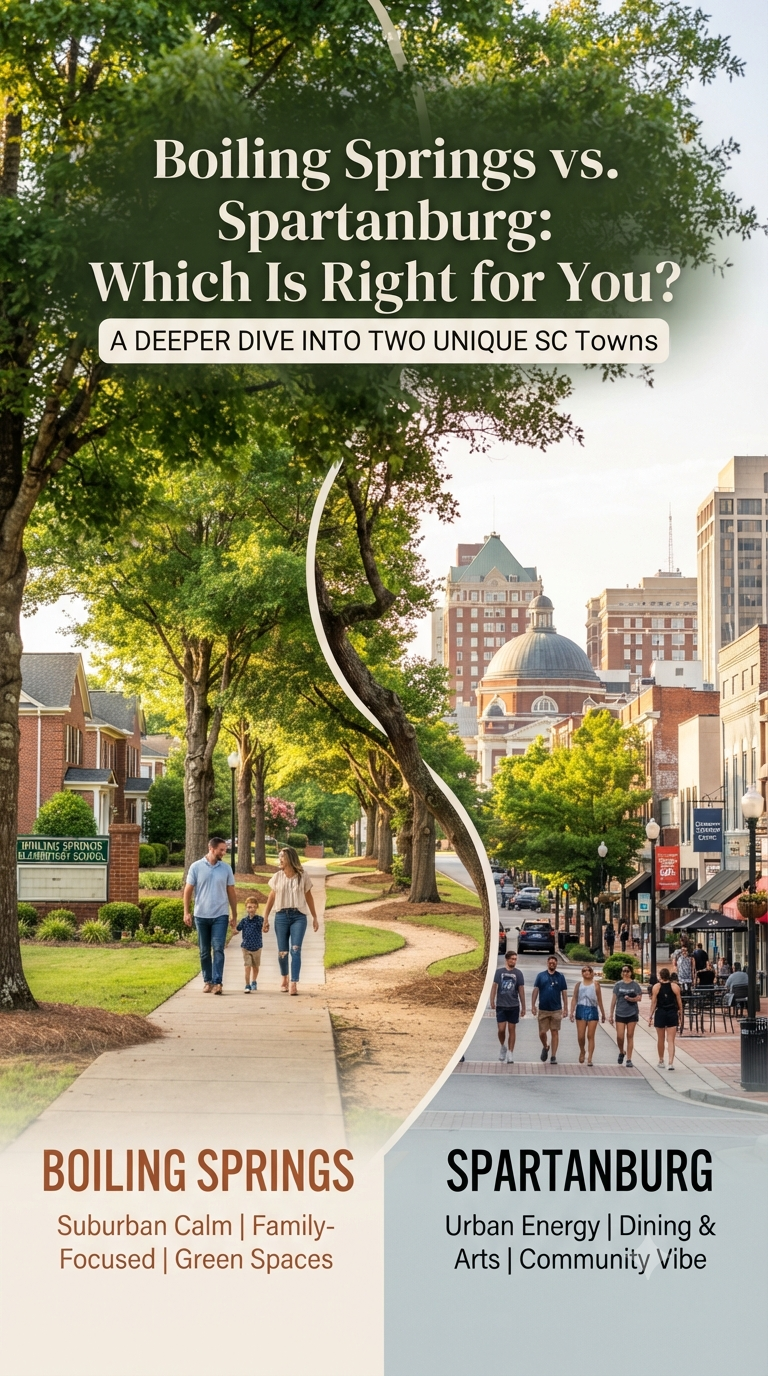
Boiling Springs vs. Spartanburg: Which Is Right for You?

Buyers considering Spartanburg County often end up weighing Boiling Springs against Spartanburg proper. The two markets sit close geographically but offer meaningfully different lifestyles, housing options, and long-term trajectories. The right answer depends on how you actually want to live, what you value in daily life, and how you think about the trade-offs each market involves.

Here is what I see as a working agent watching both markets closely, and how to think about the decision.

The Basic Character Difference

Spartanburg is a real city. Historic downtown, established neighborhoods, colleges and universities, a healthcare system, and cultural offerings that took over a century to develop.

Boiling Springs is a fast-growing suburb. Family-oriented neighborhoods, newer construction, strong schools, and a community identity that has developed over decades of growth rather than centuries of history.

That fundamental difference shapes almost everything else — the housing stock, the buyer pool, the daily rhythm, and the long-term investment picture.

The Housing Stock

Spartanburg real estate spans a wide range: historic homes in Converse Heights and Hampton Heights, established mid-century neighborhoods, downtown-adjacent inventory, newer suburbs on the edges of the city, and rural properties in the surrounding county.

Boiling Springs real estate is dominated by suburban single-family homes across a range of ages, with substantial new construction in the past decade. Historic inventory exists but is limited compared to Spartanburg proper.

The variety in Spartanburg is wider. The consistency in Boiling Springs is stronger. Which one suits you depends on whether you value having many different options across styles and price points or whether you value knowing what you are getting from neighborhood to neighborhood.

Price Points and Value

Pricing between the two markets varies by segment.

Established Spartanburg neighborhoods in historic areas often run at premiums reflecting the character and location. Downtown-adjacent inventory carries specific pricing tied to the walkable amenities.

Boiling Springs pricing tends to be more consistent across neighborhoods, with newer construction commanding predictable premiums over resale inventory.

Entry-level buyers often find Boiling Springs more accessible for single-family homes. Historic buyers often find Spartanburg has more meaningful options in that specific segment.

Luxury pricing runs higher in Spartanburg’s premier historic neighborhoods and country club areas than in equivalent Boiling Springs communities.

Boiling Springs vs. Spartanburg Which Is Right for You

Schools

Both markets serve strong school zones, but they fall under different districts.

Boiling Springs sits primarily in Spartanburg School District Two, which has grown alongside the population and continues to invest in facilities and programs. Families select specific Boiling Springs neighborhoods for the schools.

Spartanburg proper includes Spartanburg School District Seven for much of the city and portions of other districts on the edges. The district has strengths and challenges typical of larger urban systems.

For families making the choice, the specific zoning for the specific address matters more than the district comparison in the abstract.

The Downtown Question

Spartanburg has a real downtown. Restaurants, breweries, event venues, cultural offerings, and residential inventory support walkable downtown living. The downtown has invested significantly over the past decade.

Boiling Springs does not have a real downtown. The commercial center of Boiling Springs is a suburban retail corridor rather than a walkable downtown. Residents drive to Spartanburg or other cities for downtown experiences.

For buyers who value downtown access, Spartanburg wins immediately on this criterion. For buyers who prioritize other factors, the downtown difference matters less.

New Construction Availability

Boiling Springs new homes represents one of the strongest new construction concentrations in Spartanburg County. Multiple production builders have been active, with communities across a range of price points and amenity packages.

Spartanburg proper has less concentrated new construction. Newer construction exists but tends to be more scattered across specific infill projects and edge-of-city developments.

For buyers who specifically want newer construction with modern floor plans and low immediate maintenance, Boiling Springs typically offers more options.

Commute Access

Boiling Springs sits within reasonable commute distance of both Spartanburg and BMW/Greer. For families with parents working in both directions, Boiling Springs often works well.

Spartanburg proper offers shorter commutes to Spartanburg-based employers — the healthcare system, downtown offices, and the college and university employers. Commutes to BMW or Greenville are longer than from Boiling Springs.

The right commute answer depends entirely on where you actually work.

Daily Lifestyle

Spartanburg offers more walkable amenities, more restaurant variety, more cultural offerings, and a more urban daily rhythm than Boiling Springs.

Boiling Springs offers a quieter suburban daily rhythm, more family-oriented amenities, and generally larger homes on larger lots than Spartanburg proper.

For buyers who value evening dinner out, cultural events, and downtown character, Spartanburg wins. For buyers who value evening walks in the neighborhood, weekend family activities, and larger homes, Boiling Springs often wins.

Who Should Choose Boiling Springs

Boiling Springs works best for buyers who prioritize:

  • Family-oriented neighborhoods with strong schools
  • Newer construction with modern floor plans
  • Larger homes and larger lots at reasonable prices
  • Reasonable commutes to multiple employment centers
  • Suburban daily rhythm rather than urban amenities
  • Predictable neighborhood character across most of the market

Who Should Choose Spartanburg

Spartanburg works best for buyers who prioritize:

  • Real downtown character and walkable amenities
  • Historic homes and established neighborhood character
  • Cultural offerings, restaurants, and event venues
  • College-town dynamics and community life
  • Proximity to Spartanburg-based employment
  • Diverse housing stock across styles and price points

The Investor and Second-Home Consideration

For investors, both markets offer opportunities, but the strategies differ.

Boiling Springs single-family rentals tend to draw family tenants for longer holds. Newer construction and stronger schools support tenant quality and turnover reduction.

Spartanburg rentals include a broader range — student housing near Wofford and Converse, downtown lofts, historic neighborhood rentals, and traditional suburban single-family. The variety supports different investor strategies.

Second-home buyers are more common in Spartanburg’s historic neighborhoods than in Boiling Springs, though both markets see some activity.

The Growth Trajectory

Both markets are likely to continue growing. Boiling Springs has been in an active growth cycle for years and shows no signs of slowing. Spartanburg proper is in a longer-term revitalization cycle that continues to strengthen.

Long-term value support in both markets is strong. The specific value drivers differ — family demand for Boiling Springs, downtown character and historic scarcity for Spartanburg — but both support ownership across cycles.

Making the Decision

A few practical points for buyers weighing the two markets.

Visit both. Walk downtown Spartanburg on a Friday evening. Drive Boiling Springs on a Saturday morning. Get a real feel for the daily rhythm of each.

Test the commutes at actual work hours. Numbers on a map do not capture what commuting actually feels like.

Talk to current residents in the specific neighborhoods you are considering. Ask what daily life actually looks like.

Think about the ten-year picture. Where will you likely be in a decade? Which market supports that trajectory better?

Consider both markets rather than choosing one immediately. Some of the strongest fits come from seeing options in both and comparing directly.

The Bottom Line

Boiling Springs and Spartanburg are not competing markets so much as different answers to different questions. Buyers who want family-oriented suburban living with strong schools and reasonable pricing typically land in Boiling Springs. Buyers who want downtown character, historic homes, or urban amenities typically land in Spartanburg proper.

Neither is a wrong answer. The right one depends on the specific buyer.

If you want to walk neighborhoods in both markets on the same day, compare specific homes side by side, or think through how the decision affects your longer-term plans, that is exactly the kind of conversation worth having with someone who works both markets. Reach out and we will put together a tour that fits what you are weighing.

Aug. 4, 2026

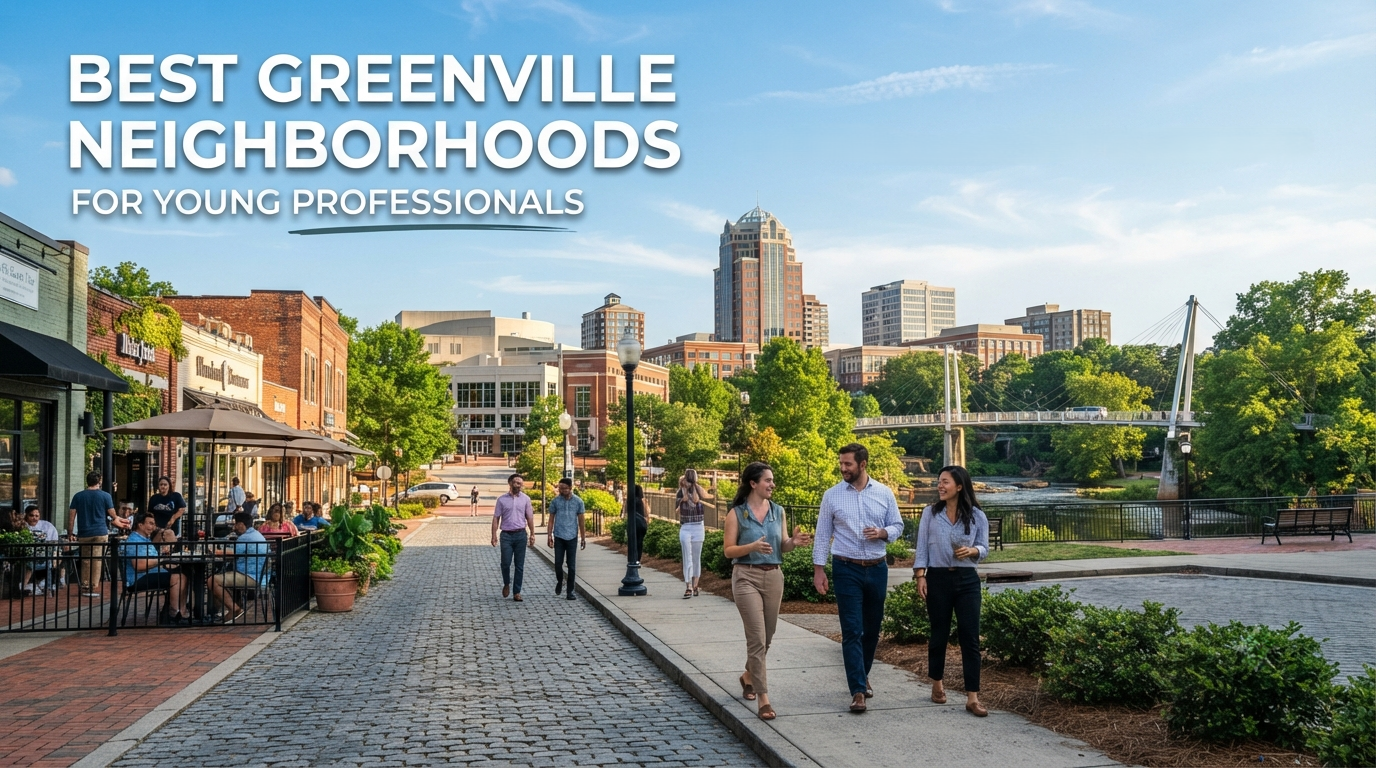
Best Greenville Neighborhoods for Young Professionals

Greenville has become one of the more compelling smaller cities for young professionals in the Southeast. The combination of a real downtown, growing employment base, reasonable cost of living relative to the metros they may have left, and community character has drawn young buyers steadily over the past decade. For young professionals considering their first home purchase or their next move, the neighborhood decision matters as much as the home itself.

Here is what I see as a working agent in this market — which neighborhoods actually work for young professionals in Greenville, why they work, and how to think about the decision.

What Young Professional Buyers Are Actually Looking For

Young professional buyers in Greenville generally weigh a specific mix of priorities.

Walkability and community feel matter. Buyers coming from Atlanta, Charlotte, or larger metros often prioritize being able to walk to dinner, coffee, or events over having a larger yard.

Commute to work matters. Depending on the employer, this might mean downtown Greenville, the Pelham Road corridor, GSP airport area, or other employment centers. The right neighborhood works for the actual commute pattern.

Community character matters. Young professionals often want neighborhoods where they can meet neighbors, participate in community events, and feel connected to the city rather than isolated in a subdivision.

Cost matters. Even young professionals with strong incomes tend to be price-sensitive on first homes, particularly if they are saving for future life stages, paying student loans, or funding retirement.

Investment upside matters. Many young professional buyers are thinking about the next move already, and they want to buy in neighborhoods that support appreciation and easy resale.

Downtown Greenville and Immediately Adjacent

Downtown Greenville anchors one of the strongest young professional neighborhood options. The walkable amenities, community events, cultural offerings, and real urban character deliver a lifestyle that suits many young professionals well.

Greenville condos for sale covers the downtown residential inventory. Condos and townhomes in the immediate downtown core carry premium pricing but deliver on the walkable lifestyle. For young professionals who value the daily downtown experience, the pricing may be worth it.

The trade-off is space. Downtown condos generally offer less square footage than equivalent suburban options. If you plan to work from home extensively, have significant hobbies requiring space, or expect to grow into the property, the space math matters.

North Main

North Main sits just north of downtown and offers walkable residential character with more space and character than downtown condos. Historic bungalows, mid-century homes, and renovated properties support a range of price points.

The neighborhood delivers on community feel. Sidewalks, small commercial nodes, and access to Cleveland Park make daily life pleasant. Access to downtown by short drive or bike ride keeps young professionals connected to the city center.

Pricing has appreciated meaningfully as young professional demand has grown. Entry-level North Main homes require willingness to update or renovate; move-in-ready inventory carries premium pricing.

Best Greenville Neighborhoods for Young Professionals

Augusta Road

The Augusta Road corridor south of downtown offers similar character to North Main with its own commercial strip and neighborhood identity. Historic homes, mid-century inventory, and select newer construction serve young professionals well.

Access to the Prisma Health system, downtown Greenville, and the southern side of the city works for many young professional commute patterns. Community character supports the neighborhood feel that young buyers value.

West End and Overbrook

The West End and Overbrook neighborhoods offer downtown-adjacent living with more space than direct downtown options at typically more accessible pricing. Walkable to downtown but with real residential character.

These neighborhoods work particularly well for young professionals who want to walk or bike to downtown regularly but do not want to live in a downtown condo. The compromise position often serves this buyer profile well.

The Eastside and Pelham Road Corridor

Young professionals working on the eastern side of Greenville or along the Pelham Road corridor often find eastern suburbs work well. Established neighborhoods, reasonable pricing, and proximity to major employers support this buyer profile.

The trade-off is walkability. Eastern suburbs typically require driving for daily life. For young professionals who value the walkable lifestyle, this is a real consideration. For those who prioritize commute and value, the eastern neighborhoods work.

Greenville real estate covers the full range of eastern suburbs and neighborhoods that serve young professionals with different priorities.

Hollingsworth Park

Hollingsworth Park delivers an intentionally walkable community that appeals specifically to young professionals who want the master-planned experience with real community amenities.

The community works for young professionals who value the amenity package, the walkable design, and the specific master-planned character. Pricing is premium, but for buyers who value what the community offers, the math often works.

Newer Master-Planned Communities

Greenville new homes covers the active builder inventory across multiple areas, including several master-planned communities that appeal to young professional buyers.

Newer construction often serves young professional priorities well — modern floor plans, low immediate maintenance, energy efficiency, and community amenities. The trade-off is typically newer construction pricing and less established neighborhood character.

What to Prioritize by Life Stage

Young professionals cover a wide range of life stages, and priorities differ accordingly.

Single young professionals often prioritize walkability, community access, and lifestyle amenities. Downtown, North Main, and Augusta Road tend to work well.

Young couples starting careers often balance walkability with future flexibility. West End, Overbrook, and select downtown-adjacent neighborhoods work well.

Young couples starting families shift priorities toward schools, yards, and family-oriented amenities. The eastern suburbs, Hollingsworth Park, and Simpsonville-area neighborhoods often become more relevant.

Young professionals with strong hobby or work-from-home requirements often need more space than downtown condos offer, pushing them toward North Main, Augusta Road, or the eastern suburbs.

Practical Considerations

A few practical points for young professional buyers.

  • Test the actual commute at real work hours. What looks reasonable on Google Maps may not match rush-hour reality.
  • Walk the neighborhood at multiple times. Weekday morning, weeknight, weekend day, weekend evening. Each shows a different picture.
  • Talk to current residents. Young professionals in the neighborhoods you are considering can tell you what daily life actually feels like.
  • Understand the resale story. Consider how your target neighborhoods have appreciated historically and what the medium-term outlook looks like.
  • Think about the next move. Even if you plan to stay years, the ease of eventual resale affects your financial flexibility.
  • Consider maintenance realistically. Historic homes require more attention than newer construction. Match your bandwidth for maintenance to the property type.
  • Do not overextend. Even young professionals with strong income should think about the total lifestyle cost, not just the mortgage payment.

The Investment Angle

For young professionals thinking about their first home as an investment as well as a residence, several factors matter.

Walkable neighborhoods have historically appreciated well in Greenville because walkable inventory is limited and demand keeps growing.

Rental support matters if you might eventually keep the property as a rental when you move. Neighborhoods with strong rental demand from young professionals continue to draw renters and support values.

Cost basis matters. Buying in neighborhoods that have already appreciated substantially reduces future upside potential relative to neighborhoods still on the rise.

The Long View

Greenville’s young professional demographic is likely to continue growing. Employer expansion, quality of life reputation, and the city’s continued investment in amenities all support the trend.

Neighborhoods that work well for young professionals today are likely to remain relevant. The compound demand from continued young professional inflow supports the values.

For young professional buyers, the strongest neighborhoods offer a combination of lifestyle fit, commute practicality, community character, and investment support. The right specific answer depends on your life stage, priorities, and long-term plans.

If you want to walk specific neighborhoods, compare options across the range, or think through how the decision affects your longer-term financial picture, that is exactly the kind of conversation worth having with someone who works this market. Reach out and we will put together a tour that fits what you are weighing.

Posted in For Buyers
Aug. 3, 2026

Living Near Tryon and Landrum

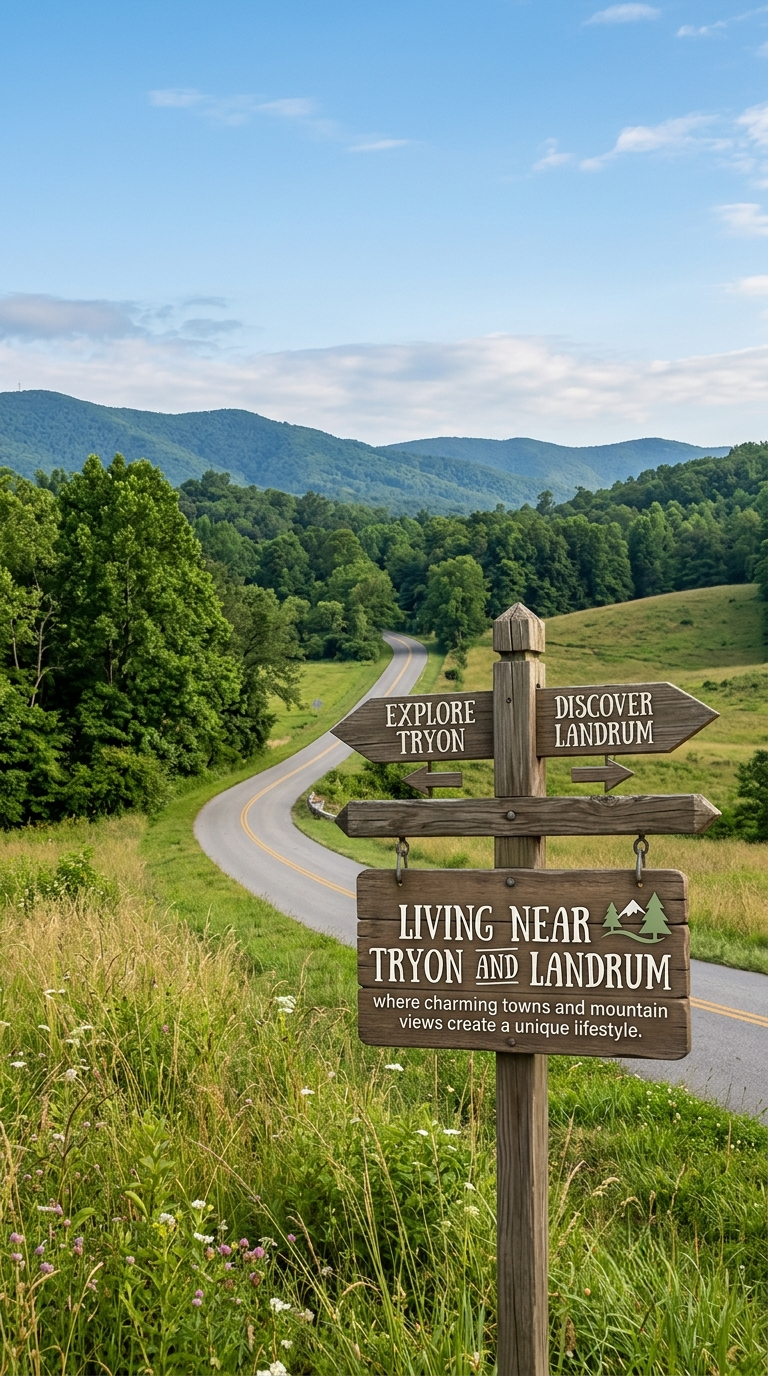
The Tryon and Landrum area sits in a distinctive corner of the Upstate that most buyers from out of state have never heard of until they get here. Tryon is technically in North Carolina, just across the state line from Landrum, South Carolina. The two towns share a foothills character, an equestrian identity, and a small-town rhythm that has drawn a specific type of buyer for decades. Together they anchor one of the most interesting micro-markets in the region.

Here is what I see as a working agent watching this market — what makes the Tryon-Landrum area distinctive, who is moving here, and what to think about as you consider it.

The Geography and Character

Tryon and Landrum sit at the base of the Blue Ridge Escarpment where the piedmont meets the foothills. The elevation change is real. Views open up as you drive north from the flatter Upstate into the ridge lines that shelter the towns.

The climate differs from the flatter Upstate. Slightly cooler summers, mountain influence on weather patterns, and the specific microclimate that comes from foothills topography. Locals sometimes refer to this area as the “Isothermal Belt” because of the moderate temperatures.

The towns themselves are small. Tryon has a population of around 1,600. Landrum has about 2,500. Combined with the surrounding rural areas, the broader Tryon-Landrum area might reach 10,000 to 15,000 residents. This is not a big city market.

The Equestrian Identity

The area’s identity centers on equestrian life more than almost any other regional identifier.

The Tryon International Equestrian Center anchors the modern equestrian activity. Major shows, national and international competitions, and the year-round equestrian calendar draw riders, spectators, and horse professionals to the area.

The Foothills Equestrian Nature Center provides trails and preserved land specifically for the equestrian community.

The Blockhouse Steeplechase and other traditional events maintain the area’s long equestrian history.

Property patterns reflect the equestrian identity. Barns, riding rings, paddocks, and pasture are common features of properties across the surrounding countryside. Buyers who are not part of the equestrian world can still buy here, but the area’s character is shaped by it.

The Housing Market

Inventory in the Tryon-Landrum area covers a distinctive range.

Equestrian estates on substantial acreage dominate the higher-end inventory. Farms, ranches, and estate properties with barns and riding facilities represent much of what buyers relocating to the area from established equestrian markets are looking for.

Mountain-view homes on the ridges leading up toward the escarpment offer distinctive properties with long-range views and elevation advantages.

Historic homes in downtown Landrum and Tryon offer smaller-scale character properties at more accessible price points.

Custom homes on smaller acreage parcels serve buyers who want privacy and land without full equestrian infrastructure.

Standard suburban homes exist but are less common than in the flatter Upstate markets.

For buyers focused on Landrum specifically, the broader inventory picture connects to the Spartanburg County market. Spartanburg horse property covers much of the equestrian inventory in the region, and a significant share of that inventory sits in the Landrum area.

The Cross-Border Question

Buyers considering the Tryon-Landrum area often ask about the practical implications of the North Carolina-South Carolina state line.

Taxes differ. South Carolina and North Carolina have different property tax structures, income tax rates, and estate tax rules. For some buyers, one side of the line makes meaningfully more financial sense than the other.

Insurance and services can vary. Homeowners insurance rates, healthcare access, and utility providers all depend on which side of the line you live on.

Practical daily life often crosses the line without much friction. Buyers in Landrum shop, eat, and socialize in Tryon regularly. Buyers in Tryon do the same on the Landrum side. The state line is a legal and financial boundary more than a lifestyle one.

For buyers whose priorities lean toward South Carolina taxes and structures, Landrum is often the right answer. For buyers who prefer North Carolina structures or specifically want a Tryon address, the North Carolina side works.

Mountain Views and the Foothills Lifestyle

The area’s foothills character supports specific lifestyle draws beyond equestrian activity.

Long-range mountain views are available on premium lots throughout the area. Not every property has views, but the ones that do carry premiums that reflect the specific appeal.

Outdoor activity is accessible. Hiking, biking, and outdoor recreation in the surrounding foothills all support an active lifestyle for buyers who value that.

The seasonal experience differs from the flatter Upstate. Fall color runs through the foothills in ways that flatter areas do not experience. Spring feels different. Even winter has distinctive character.

Homes with mountain views covers the broader Upstate view-oriented inventory, and Tryon-Landrum represents a meaningful concentration of that inventory.

 Living Near Tryon and Landrum

Who Is Moving to the Area

The Tryon-Landrum buyer pool is more specific than most Upstate markets.

Equestrian buyers from Wellington, Florida, and other major equestrian markets choosing the area for the year-round riding, the equestrian center, and the lower cost basis than their home markets.

Retirees looking for a foothills lifestyle at reasonable cost. Many come from the Northeast, the Midwest, or Florida.

Second-home buyers from Charlotte, Atlanta, and points further away using the area as a weekend or extended-stay property.

Remote workers who want significant privacy, acreage, and character without giving up reasonable airport access through Greenville-Spartanburg or Asheville.

Long-term local families building or upgrading on family-held land.

Practical Considerations Before Buying

A few things worth thinking through if the Tryon-Landrum area is on your list.

  • Water source matters. Many properties run on private wells. Have the well tested and the flow rate verified during your inspection period.
  • Septic systems are standard. Know the age, capacity, condition, and last service date. Ask about percolation and any history of failures.
  • Acreage varies enormously in usability. Build sites, pasture quality, drainage, slope, and equestrian suitability all vary property by property. Walk the land carefully.
  • Internet quality varies dramatically. If remote work or streaming entertainment is part of your life, verify actual upload and download speeds at the specific property.
  • Insurance depends on multiple factors. Distance to fire stations, age of home, wood stoves, outbuildings, and equestrian structures all factor in. Get an actual quote.
  • Local services are limited. Grocery, healthcare, and specialty services often require driving to Spartanburg, Asheville, or other larger cities.
  • Historic district rules apply in some parts of Landrum. Verify what changes you can make before assuming.

Where the Tryon-Landrum Area Fits Regionally

For buyers comparing this area against other Upstate options:

Spartanburg real estate offers a real city thirty minutes south with services, downtown character, and different lifestyle characteristics.

The broader northern Spartanburg County offers rural character at more accessible pricing without the specific Tryon-Landrum foothills identity.

Asheville and the North Carolina mountains further north offer a bigger city with different character at generally higher pricing.

Tryon-Landrum wins for buyers who specifically want foothills lifestyle, equestrian community, and small-town character combined with reasonable access to bigger cities when needed. It loses when buyers need dense local services, walkable downtown urbanism, or a broader range of housing options.

The Long View

The Tryon-Landrum area is unlikely to change character dramatically. The geography, the equestrian identity, and the specific buyer pool that finds this area all combine to keep the character intact.

As more buyers from larger metros discover this corner of the region, demand keeps pushing against a relatively fixed supply. Long-term value support has been strong for well-selected properties.

For buyers who fit the area’s character, the Tryon-Landrum lifestyle is genuinely irreplaceable in the Southeast. Few markets combine what this area offers at similar price points.

If you want to walk specific properties, understand what the equestrian infrastructure means for practical daily life, or compare Tryon-Landrum against other rural Upstate options, that is exactly the kind of search where local knowledge matters. Reach out and we will put together a tour that fits what you are considering.

July 31, 2026

Why Mauldin Is Growing So Quickly

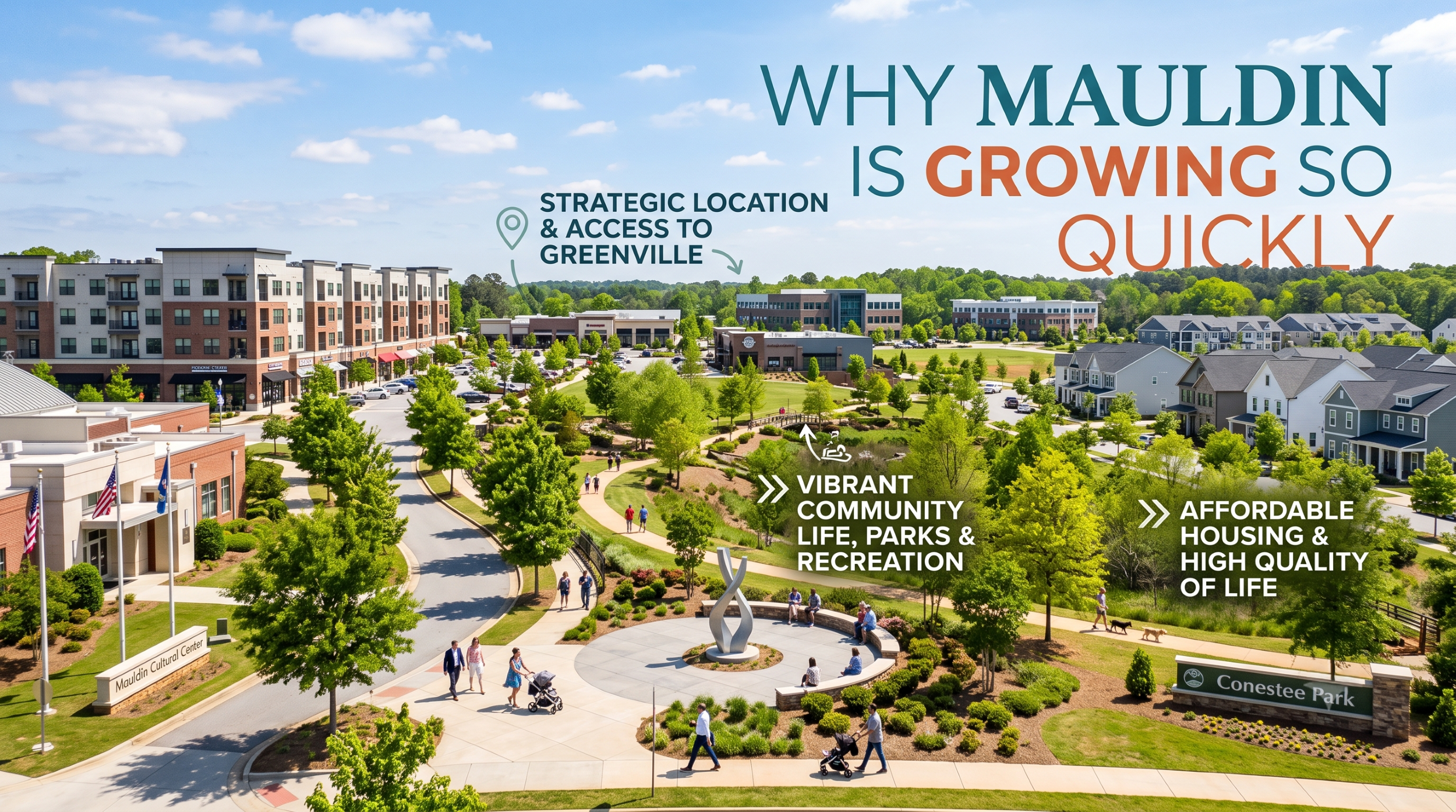
Mauldin was easy to overlook a decade ago. A quiet Greenville commuter suburb with strong schools but not much identity of its own. That has changed dramatically. Mauldin has emerged as one of the most dynamic growth stories in the Upstate, and the trajectory looks likely to continue for years to come.

Here is what I see as a working agent watching this market — what has driven the growth, why it matters for buyers and sellers, and where I think Mauldin is headed.

BridgeWay Station Changed the Trajectory

The most visible driver of Mauldin’s growth has been BridgeWay Station. The mixed-use development brought national attention, drew retail and residential investment, and elevated Mauldin’s profile from commuter suburb to destination.

The development itself continues to expand. Residential inventory alongside retail, restaurants, office space, and event venues has created walkable urbanism that the surrounding area lacked. For a city of Mauldin’s size, BridgeWay Station represents an outsized amenity.

The ripple effects have been broader than the development itself. Neighborhoods within reasonable distance have appreciated. Restaurants and services outside BridgeWay have benefited from the increased foot traffic and residential density. Mauldin as a whole has felt the effect.

Location Has Always Worked

Mauldin’s location advantages predated BridgeWay Station and continue to support the growth story.

Direct access to I-385 makes downtown Greenville a short commute. For professionals working in Greenville, Mauldin offers reasonable pricing without the compromises of longer commutes from more distant suburbs.

Access to the Greenville healthcare corridor, downtown business districts, and cultural amenities keeps Mauldin practical for buyers whose lives happen partly in Greenville proper.

Proximity to Simpsonville and the broader Greenville southern suburb network offers additional flexibility. Mauldin is close enough to Simpsonville and Fountain Inn that buyers can access what those communities offer without living there.

Schools Remain a Consistent Draw

Mauldin sits inside Greenville County Schools, which anchors much of the city’s ongoing appeal for families. Specific schools zoned to Mauldin addresses have generally performed well and continue to draw family buyers who want the schools without paying Greenville-proper prices.

The connection between school demand and housing appreciation is direct. Families continue moving to Mauldin for the schools, which supports both new construction demand and resale values.

New Construction Has Accelerated

Production builders and townhome developers have found Mauldin’s combination of location, schools, and BridgeWay-adjacent appeal compelling. New construction has grown across single-family, townhome, and mixed-use segments.

Townhome development in particular has expanded meaningfully. The buyer pool for townhomes near BridgeWay Station has been deeper than many developers anticipated, and the inventory continues to turn over as it is built.

Single-family new construction in the areas surrounding Mauldin has also accelerated. Families and downsizers have supported new communities in and near the city, with pricing that reflects the ongoing demand.

For a look at what active new construction inventory looks like across the broader area, Greenville new homes covers builder activity across the eastern and southern suburbs.

Why Mauldin Is Growing So Quickly

The Cost Advantage Over Greenville Proper

Mauldin has maintained a meaningful cost advantage over Greenville-proper inventory. Buyers who want reasonable proximity to Greenville amenities but do not want to pay Greenville-proper prices have consistently found value in Mauldin.

That cost advantage has narrowed as Mauldin has grown, but it remains real. Comparable single-family homes in Mauldin often run meaningfully less than equivalent inventory in Greenville-proper neighborhoods.

For a broader view of both markets, Mauldin real estate and Greenville real estate together show the price and inventory differences buyers see when comparing.

Employment Base Continues to Support Growth

Mauldin does not have a single dominant employer the way BMW anchors Greer or the Inland Port anchors parts of Spartanburg County. Instead, Mauldin’s employment story ties into the broader Greenville-Spartanburg regional employment picture.

Healthcare, professional services, manufacturing, logistics, and retail all employ Mauldin residents across the surrounding region. That diversity has actually been an advantage — Mauldin is not overly dependent on any single employer sector, which supports stability.

Remote work has added another dimension. As remote and hybrid work has grown, Mauldin’s appeal to workers who need to reach the office occasionally but do not commute daily has strengthened.

Who Is Moving to Mauldin

The Mauldin buyer pool has diversified alongside the growth.

Young professionals working in Greenville who want to buy their first home in a place with real amenity access at reasonable pricing.

Families relocating from out of state, particularly to jobs in the broader Greenville area, choosing Mauldin for schools and value.

Empty nesters downsizing from larger suburban homes elsewhere in the region who want walkable amenities without downtown Greenville pricing.

Retirees drawn to the combination of amenities, healthcare access, and reasonable cost of living.

Second-home buyers using Mauldin as a base for extended stays in the Upstate.

Investors targeting rental property in a market with strong tenant demand.

The Housing Market Response

Growth has driven measurable changes in the housing market.

Prices have appreciated steadily but not dramatically. The pace has been healthy rather than volatile.

Days on market for well-priced homes have stayed short. Well-prepared homes in good condition sell quickly.

New construction absorption has stayed strong, particularly for townhomes near BridgeWay Station and single-family homes in strong school zones.

Investor activity has grown but remains a smaller share than in some markets. Owner-occupant demand still dominates.

What the Growth Means for Different Market Participants

For buyers, the growth story means Mauldin remains a reasonable market for reasonable prices, but you cannot afford to be indecisive. Well-priced homes move quickly, and the buyers who are ready to act tend to win competitive situations.

For sellers, the growth story supports strong pricing for well-prepared homes. Preparation still matters — overpriced or poorly prepared homes still sit — but the market rewards quality inventory.

For investors, Mauldin offers stable rental demand with reasonable cap rates for well-selected property. Cap rates have compressed as prices have risen, but the underlying fundamentals remain supportive.

For long-term holders, Mauldin’s trajectory supports continued appreciation. The city is not going to slow down abruptly, and the compound effect of steady growth adds up.

Risks Worth Watching

Growth stories are not immune to reversals, and Mauldin has its own risks.

Traffic and infrastructure pressure is real. As the city grows, roads, schools, and services face pressure. How the city responds affects both quality of life and property values.

The broader economy affects Mauldin alongside the rest of the Upstate. Recessions, interest rate spikes, and employment shocks would all affect the local market.

Over-building is worth watching. If new construction outpaces buyer demand, absorption slows and pricing pressure builds.

None of these are reasons to bet against Mauldin, but they are factors worth understanding as you make specific real estate decisions.

Where I Think Mauldin Is Headed

Mauldin’s growth trajectory looks durable for the foreseeable future. BridgeWay Station continues to expand. New construction continues to absorb well. The buyer pool remains diverse.

I expect continued steady appreciation rather than dramatic spikes. That is arguably the healthier trajectory. Steady growth supports both current owners and future buyers.

I expect the walkable urbanism trend to expand beyond BridgeWay Station. Mauldin has caught on to what walkable, mixed-use design can do, and future developments are likely to follow that pattern rather than reverting to standard suburban form.

The Long View

Mauldin has evolved into a real destination market with its own identity. The growth is not going to stop soon, and the fundamentals support continued value creation for buyers, sellers, and investors alike.

If you want to look at what the growth means for a specific property, a specific neighborhood, or a specific buying or selling decision, that is exactly the kind of conversation worth having with someone who works this market. Reach out and we can dig into the specifics.

Posted in For Buyers
July 30, 2026

New Construction Communities in Anderson County

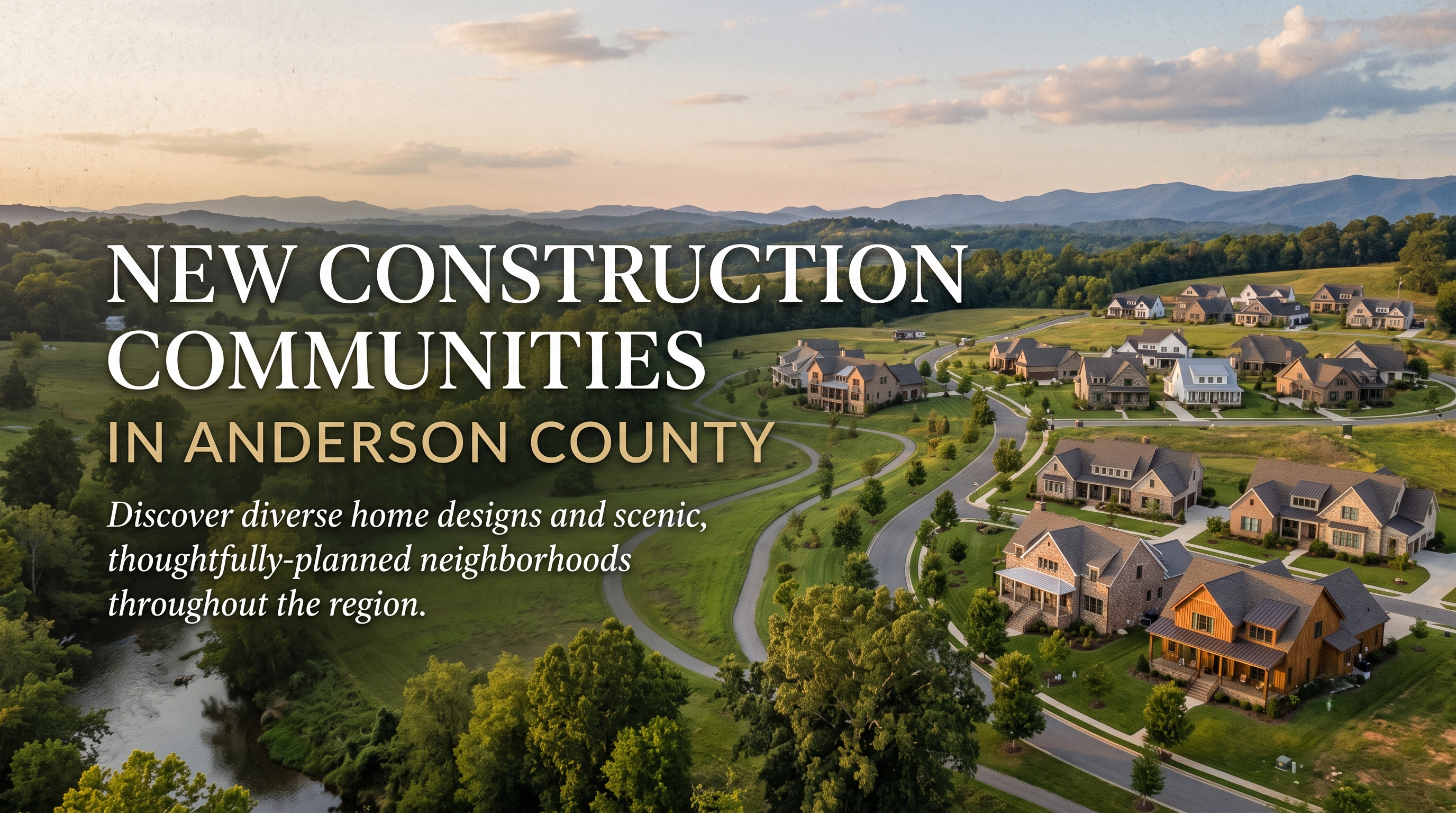
Anderson County has quietly become a serious new construction market. Builders who used to focus almost exclusively on Greenville and Spartanburg counties have shifted meaningful attention to Anderson, and the result has been a wave of new communities that give buyers real options across a range of price points and lifestyle preferences.

Here is what I see as a working agent watching Anderson new construction — why builders moved in, what the communities actually offer, and how to think about the decision if new construction is on your search.

Why Anderson Attracted Builders

Several factors combined to make Anderson County one of the more compelling new construction markets in the region.

Land availability worked in Anderson’s favor. As Greenville County suburbs filled in, builders looking for larger parcels and manageable permitting moved south into Anderson. Lot prices were more accessible, and the regulatory environment supported large-scale community development.

Demand grew alongside supply. Out-of-state relocators, retirees drawn to Lake Hartwell, families priced out of Greenville-area new construction, and Clemson-adjacent buyers all began looking at Anderson at higher rates than a decade ago.

Cost of construction stayed manageable. Compared to more expensive markets, Anderson lot costs and labor availability supported reasonable base pricing for the buyer.

Infrastructure investment supported growth. Road improvements, school expansions, and utility upgrades made larger communities practical.

The Types of New Construction You Will See

Anderson County new construction breaks into several distinct categories.

Production Builder Master-Planned Communities

The largest segment. National and regional production builders have built out neighborhoods with master plans, amenity packages, and broad floor plan selections. Pricing typically anchors in the low $300s to mid $500s depending on plan, lot, and community.

These communities target family buyers, downsizers, and the broader Anderson buyer pool. Amenities range from basic to substantial — pools, clubhouses, walking trails, and community gathering spaces.

Lake Hartwell-Oriented New Construction

Communities positioned around Lake Hartwell access target specific buyer profiles. Lake-adjacent lots, community boat access, or view-oriented lot positioning all support premium pricing for buyers prioritizing lake lifestyle.

Anderson waterfront homes covers the true lakefront inventory, but the near-lake new construction represents a different segment that offers lake proximity without lakefront pricing.

Active Adult and 55+ Communities

Anderson has become an interesting market for active adult new construction. Retirees drawn to the cost of living, healthcare access at AnMed Health, and lake lifestyle have supported builders in developing communities specifically for the 55+ demographic.

These communities offer single-level floor plans, low-maintenance landscaping, amenity packages focused on active adults, and community programming designed for the demographic.

Golf Community New Construction

Anderson’s golf-oriented new construction sits alongside Anderson golf homes in the broader golf community market. Newer construction integrated into or adjacent to established courses supports specific buyer profiles.

Custom and Semi-Custom Communities

Smaller-scale communities with custom or semi-custom builds exist across the county. These typically offer larger lots, higher-end finishes, and buyer input on the build process. Pricing varies widely.

Townhome Communities

Newer townhome construction has grown as builders respond to first-time buyer, downsizer, and lifestyle-oriented demand. Pricing typically runs from the mid $200s into the low $400s depending on community and finish level.

New Construction Communities in Anderson County

Where to Start Your Search

For buyers focused on Anderson County, Anderson real estate is the broadest starting point and covers both new construction and resale inventory.

Comparing Anderson new construction against other Upstate markets helps clarify what the pricing and amenities are actually worth. Anderson typically wins on affordability for equivalent square footage and amenity packages. It loses when buyers specifically want Greenville-area amenities and lifestyle.

Who Is Buying Anderson County New Construction

The buyer pool has diversified significantly.

Out-of-state families relocating for jobs in the Upstate or for retirement, drawn by cost of living and quality of life factors.

Retirees from higher-cost markets who find Anderson delivers lifestyle amenities at meaningfully lower cost than their previous locations.

Families priced out of Greenville or Simpsonville new construction who find Anderson offers equivalent homes at more accessible prices.

Clemson-affiliated buyers — parents of students, alumni, faculty considering relocation — who value proximity to Clemson combined with Anderson’s cost advantages.

Second-home buyers targeting Lake Hartwell or golf community access without leaving reasonable travel distance from primary residences.

Investors targeting single-family rentals in specific price ranges where the cap rate math works.

What to Watch When Touring

A few things specific to Anderson County new construction.

  • HOA structures vary widely across communities. Some have minimal amenities and low dues; others include substantial amenity packages at higher fees. Match what you are paying for to what you will use.
  • Lake proximity affects pricing meaningfully. Communities marketed as lake-oriented carry premiums that may or may not deliver on actual lake access. Verify what the community actually offers in terms of water access.
  • Lot premiums are real. Two homes in the same community can carry very different lot prices based on view, privacy, or proximity to amenities.
  • Builder incentives shift regularly. Rate buy-downs, closing cost credits, and standing-inventory discounts vary by builder and season. Compare current offerings across multiple builders.
  • Warranty coverage is not the same across builders. Read what is actually covered, for how long, and how the builder responds to post-closing issues.
  • Phase pricing affects value. Earlier phases in many communities sold at meaningfully lower prices than later phases. Understand where the community sits in its build-out.
  • Verify school zoning for the specific address. Anderson County schools serve different areas differently, and the zoning matters for families.
  • Understand septic and well realities. Some Anderson County new construction uses public water and sewer; some uses well and septic depending on location. The math differs.

Location Considerations Within the County

Anderson County is large geographically, and location matters within it.

Communities on the western side of the county closer to Lake Hartwell and Clemson emphasize lake and Clemson-adjacent lifestyles.

Communities near Anderson city offer easier access to AnMed Health, downtown Anderson, and city amenities.

Communities toward the eastern edge of the county offer easier access to Greenville and Interstate 85 corridors.

Rural communities in the surrounding areas offer larger lots and more privacy at generally more accessible pricing.

Match the location within the county to your actual daily life patterns.

Where Anderson County Fits Regionally

For buyers comparing Anderson County new construction against nearby markets:

Greenville County new construction typically runs at higher price points with the advantages of urban amenity proximity.

Pickens County new construction in Easley or the western Upstate offers different price points with different school and lifestyle characteristics.

Spartanburg County new construction serves a different geographic set of buyers with different commute considerations.

Anderson wins for buyers prioritizing cost of living, lake or Clemson-adjacent lifestyle, or retiree amenities. It loses for buyers who specifically want Greenville-area proximity or Spartanburg’s specific characteristics.

The Long View

Anderson County new construction is likely to remain an active segment for years to come. The demand fundamentals — retiree inflow, cost of living advantage, Lake Hartwell draw, Clemson gravitational pull — all support continued absorption of new inventory.

For buyers thinking about long-term homes in Anderson County, the fundamentals support the decision. The county’s trajectory is positive, and well-selected new construction should hold value across market cycles.

If you want to walk specific communities, compare floor plans across builders, or understand what incentives are currently available, that is exactly the kind of work an agent saves you time on. Reach out and we will put together a tour that fits what you are considering.

Posted in For Buyers
July 29, 2026

Living in Downtown Greenville: Pros and Cons

Downtown Greenville has become one of the most talked-about small city centers in the Southeast, and for good reason. The revitalization over the past two decades has produced a downtown that supports real residential life — restaurants, parks, walkability, events, and a density of activity that most cities its size cannot match. For a growing number of buyers, downtown Greenville is not just a place to visit but a place to live.

If you are considering downtown living, here is what I see as a working agent in this market. The pros are real. The cons are also real. Both matter for the decision.

What Downtown Greenville Living Actually Looks Like

The downtown residential experience varies more than newcomers expect. Some downtown residents live in high-rise condos with elevator access to Main Street. Some live in historic homes a few blocks off the core. Some live in newer townhome developments within walking distance of Falls Park. Each of these represents a different flavor of downtown living, and the daily experience differs accordingly.

The core downtown area — the blocks immediately around Main Street, Falls Park, and the Peace Center — delivers the most concentrated urban experience. Restaurants, shops, coffee, events, and the Reedy River corridor are all within short walks.

The residential neighborhoods a few blocks further out — North Main, West End, Overbrook, and similar — deliver more of a residential feel with meaningful walkability still intact. These blend downtown access with quieter streets, yards, and more space per dollar.

The Pros

Downtown Greenville offers real advantages that keep drawing new residents.

Walkable Daily Life

The most-cited reason buyers choose downtown Greenville is walkability. Dinner out without driving. Coffee in the morning without leaving your block. Weekend events at Falls Park or NOMA Square that require no parking hassle. For buyers who value car-optional living, downtown delivers what most of the Southeast simply does not offer.

Real Community and Activity

Downtown Greenville is not a ghost town after five p.m. Restaurants stay busy, events happen year-round, and the community feel is genuinely present. Buyers who moved from Atlanta, Charlotte, or larger metros often note that downtown Greenville feels more alive than the downtowns they left.

Cultural and Entertainment Access

The Peace Center, TD Convention Center, Bon Secours Wellness Arena, and multiple smaller venues bring music, theater, sports, and events downtown regularly. Residents walk to shows they would drive an hour to see in most cities.

Access to Parks and the Swamp Rabbit Trail

Falls Park sits at the heart of downtown, and the Reedy River corridor and Swamp Rabbit Trail extend outdoor access well beyond what most urban environments offer. Downtown residents can walk into the park, follow the river, and connect to the broader trail system without ever getting in a car.

Investment Support

Downtown Greenville property values have appreciated meaningfully over the past decade. The residential inventory is limited, demand keeps growing, and the trajectory supports long-term value. For buyers thinking about a long-term home or investment, downtown offers strong fundamentals.

For a look at active inventory, Greenville condos for sale covers the downtown residential condo market, and Greenville real estate shows the broader downtown-adjacent inventory.

The Cons

Downtown living is not for everyone. A few realities matter for the decision.

Price

Downtown Greenville commands the highest per-square-foot pricing in the region. Buyers coming from Atlanta or Charlotte may find it reasonable; buyers coming from more affordable markets sometimes feel priced out. The lifestyle is worth it for those who can afford it, but the math matters.

Space Constraints

Downtown condos generally offer less square footage than equivalent suburban homes. Storage is limited. Second bedrooms or home offices are smaller. Buyers relocating from larger homes need to think about what they will keep, what they will part with, and how the day-to-day space math works.

Limited Grocery Access

Even the walkable downtown Greenville does not deliver walkable grocery for most residents. A car remains part of the equation for weekly shopping. Buyers expecting European-style walking-only groceries need to recalibrate.

Noise and Activity

Downtown is a busy place, particularly on weekends. Live music, events, restaurant patios, and weekend crowds create noise that suits some residents and grates on others. Test a downtown property at multiple times of day and week before committing.

Parking

Downtown parking is workable for residents with dedicated spaces but limited for guests. Family visits, deliveries, and service calls all involve figuring out parking that suburban life takes for granted.

Family Life Considerations

Downtown Greenville is less family-oriented than the surrounding suburbs. Schools zoned to downtown addresses are mixed. Space for kids to play, yards, and typical suburban family amenities are limited. Some families make downtown work; most families end up in suburbs like Simpsonville, Mauldin, or Taylors instead.

Living in Downtown Greenville Pros and Cons

Who Downtown Greenville Works For

The downtown buyer pool has become broader over the past decade, but a few profiles consistently choose downtown.

Empty nesters downsizing from larger suburban homes who want walkable daily life, cultural access, and lower ongoing maintenance.

Young professionals working downtown or nearby who value walkability and the community feel that downtown offers.

Second-home buyers from Charlotte, Atlanta, or further north who use their downtown property as a weekend or extended-stay place.

Retirees who specifically want an urban retirement rather than a suburban or lake-oriented one.

Remote workers with flexibility who value the lifestyle amenities that downtown delivers.

What Downtown Greenville Does Not Work For

Downtown does not suit every buyer. A few buyer profiles typically end up elsewhere in the region.

Families with school-age children usually find better fit in suburbs with better school zoning and more family-oriented amenities.

Buyers wanting substantial yards, gardens, or outdoor space beyond what downtown offers.

Buyers on tight budgets who cannot absorb the downtown pricing premium without meaningful compromises elsewhere.

Buyers who value quiet daily life and low activity levels around their home.

Comparing Downtown Against Nearby Options

For buyers weighing downtown Greenville against alternatives, several nearby options offer versions of walkable or amenity-rich living at different price points.

Greenville luxury homes outside the immediate downtown core often offer larger homes, larger lots, and specific amenity packages at lower per-square-foot pricing than downtown condos and townhomes.

The North Main and Augusta Road neighborhoods deliver walkable residential character with more space and often at slightly more accessible pricing.

Hollingsworth Park delivers an intentionally walkable community feel in a different location with different daily rhythm.

Downtown Greer, Simpsonville, Travelers Rest, and other Upstate downtowns offer smaller-scale downtown living at meaningfully lower pricing.

Practical Considerations Before Buying

A few things worth thinking through before committing to downtown living.

  • Visit downtown at multiple times of day and week. The Tuesday morning experience differs from the Saturday night experience.
  • Test the actual walk to the places you would go regularly. Google Maps distance is not the same as the walk itself.
  • Understand your HOA structure if buying a condo. Fees, reserves, rental restrictions, and amenity funding all matter.
  • Consider parking realistically. If you have multiple cars or expect frequent guests, downtown parking may complicate life.
  • Think about long-term flexibility. If your life changes — new relationship, children, retirement priorities — how does downtown living adapt?

The Long View

Downtown Greenville is likely to continue evolving in the same direction. More residential inventory, more amenities, more cultural investment. The trajectory supports long-term value for buyers choosing the downtown lifestyle.

The lifestyle is real, the community is genuine, and the trajectory is positive. But the cost is meaningful and the trade-offs are specific. Buyers who fit downtown living tend to love it. Buyers who do not fit tend to be miserable within a year or two.

If you want to walk downtown Greenville together, tour a few different downtown property types, and think through whether the lifestyle actually matches how you want to live, that is exactly the kind of conversation worth having with someone who works this market. Reach out and we can put together a tour that fits what you are weighing.

Posted in For Buyers
July 28, 2026

Living in Downtown Greer

Downtown Greer has become one of the more interesting small downtowns in the Upstate. Trade Street and the surrounding blocks have transformed from a sleepy corridor into a real destination with restaurants, shops, breweries, community events, and a residential scene that has grown alongside the commercial revival. For buyers who want walkable small-town living without paying downtown Greenville prices, downtown Greer offers a compelling option.

Here is what I see as a working agent in this market — what downtown Greer living actually looks like, who is choosing it, and what to think about as you consider it.

What Downtown Greer Has Become

A decade ago, downtown Greer was mostly a commuter pass-through. Trade Street had a few establishments but not much reason to stop unless you lived nearby. That has changed dramatically.

Restaurants have proliferated. Local coffee culture has developed. Craft breweries have opened. The event calendar — farmers markets, festivals, holiday events, weekly gatherings — has grown into something that supports real community life.

The residential scene has responded. Historic homes near downtown have appreciated meaningfully. New townhome and condominium inventory has been built. Existing residents have benefited from the growing amenities without leaving their homes.

For buyers considering the area, Greer real estate covers the broader Greer market including both downtown-adjacent inventory and the surrounding neighborhoods.

Who Is Choosing Downtown Greer

The downtown Greer buyer pool runs across several distinct groups.

Empty nesters downsizing from larger suburban homes elsewhere in Greer or the surrounding areas who want walkable daily life without giving up their broader community connections.

Young professionals working in Greer, at BMW, or in the broader Upstate who value the community feel and walkable amenities that downtown Greer offers at prices significantly below downtown Greenville.

Retirees looking for an active downtown retirement without the pricing or density of Greenville proper.

Second-home buyers from Charlotte, Atlanta, and further north using downtown Greer as a weekend or extended-stay property.

Remote workers who want walkable amenities as part of daily life and value the smaller-scale community that downtown Greer offers.

Families with older children or without school-age kids who value walkability and community events.

The Housing Inventory

Inventory in and immediately around downtown Greer includes several distinct segments.

Historic homes on the streets surrounding downtown. These range from restored properties to homes needing significant investment. Character, mature landscaping, and proximity to Trade Street support pricing.

Newer townhome and condominium developments built in response to the growing downtown demand. These offer modern floor plans, low immediate maintenance, and walkable proximity to downtown amenities.

Mid-century homes on streets a few blocks off the core downtown area. These offer good bones, reasonable square footage, and neighborhood character at accessible pricing.

Custom or renovated homes on premium lots within walking distance of downtown. These represent the higher end of the immediate downtown market.

Living in Downtown Greer

What Makes Downtown Greer Work

A few factors combine to make downtown Greer function as a real residential option.

Genuine Walkability

Trade Street and the surrounding blocks support real walkable daily life. Dinner, drinks, coffee, weekend errands — all within short walks of the surrounding residential streets. Sidewalks are consistent, crossings are manageable, and the neighborhood scale supports walking.

Community Events

The event calendar has become substantial. Weekly farmers markets, seasonal festivals, holiday events, and regular downtown activities support the sense of community life. Residents actually attend these events and know their neighbors.

Retail Mix

Local restaurants, boutiques, coffee shops, and specialty retail have grown alongside the residential demand. The mix is not just chains — local businesses give downtown Greer its specific character.

Cost Advantage Over Downtown Greenville

Pricing in downtown Greer runs meaningfully below downtown Greenville for equivalent walkable amenities. Buyers who want the downtown lifestyle without paying Greenville pricing find real value.

Access to the Broader Upstate

Downtown Greer sits within reasonable driving distance of both Greenville and Spartanburg. Residents can access downtown Greer for daily life and drive to the bigger cities for specific amenities.

What to Think Through

Downtown Greer living has its own considerations worth understanding.

  • The scale is smaller than downtown Greenville. If you want big-city downtown density, downtown Greer will feel too small. If you want walkable small-town life, it may feel exactly right.
  • Restaurant and retail options are growing but not as extensive as Greenville’s. For buyers who want maximum variety, that is a real difference.
  • Event traffic and parking on busy weekends can affect residential streets. Test the neighborhood during a busy event weekend before committing.
  • Historic homes require historic-home considerations — older systems, foundation questions, insurance realities. Inspect carefully.
  • School zoning for downtown Greer addresses varies. Verify current zoning for any specific address.
  • Investment activity has increased. Some short-term rental use has grown in the downtown-adjacent area, which affects neighborhood dynamics.

How Downtown Greer Fits Regionally

For buyers weighing downtown Greer against other options in the Upstate:

Downtown Greenville offers more amenities, more density, and more cultural options at meaningfully higher pricing.

Spartanburg real estate includes downtown Spartanburg options with its own scale and character, at generally comparable or slightly different pricing.

Downtown Travelers Rest offers a similar scale to downtown Greer with its own character shaped by the Swamp Rabbit Trail and the surrounding foothills.

Downtown Simpsonville and downtown Fountain Inn offer smaller-scale walkable options at generally more accessible pricing.

Downtown Greer sits in a specific sweet spot — scale beyond the smaller Upstate downtowns, pricing below Greenville, community character genuinely developed, and ongoing investment supporting continued growth.

Practical Considerations

A few practical points I share with buyers evaluating downtown Greer.

Visit at multiple times. Weekend evening feels different from Tuesday morning. Get the full picture.

Walk the actual routes. Grocery store distance, restaurants you would use regularly, and community amenities all matter for daily life. Test the walks.

Consider parking realistically. If you have multiple cars or frequent guests, parking in the immediate downtown blocks may complicate life.

Understand the specific property. Historic homes near downtown range widely in condition and updates. Newer townhomes vary in HOA structure and amenity offerings. Match the property to your priorities.

Talk to current residents. Ask about the community feel, event dynamics, and what daily life actually looks like.

The Long View

Downtown Greer is likely to continue growing in the same direction. More residential inventory, more retail and restaurant options, and continued community investment support the trajectory.

For buyers thinking about a long-term home in downtown Greer, the fundamentals are positive. Pricing has appreciated meaningfully but the fundamentals still support the values. The community feel is real. The trajectory continues.

If you want to walk downtown Greer, tour specific properties, and think through whether the lifestyle actually matches how you want to live, that is exactly the kind of conversation worth having with someone who works this market. Reach out and we will put together a tour that fits what you are considering.

July 27, 2026

Mauldin Schools and Real Estate

For families considering Mauldin, the school question is one of the most important parts of the decision. Mauldin sits inside Greenville County Schools, which means the specific school zoning for a given address can shape both daily family life and long-term home values. As a working agent in this market, I see the school-driven housing dynamics play out consistently.

Here is what families should know about Mauldin schools, how they connect to real estate values, and what to think about as you tour.

Mauldin and Greenville County Schools

Mauldin sits entirely within the Greenville County school system. The district is the largest in South Carolina and one of the larger public school systems in the Southeast, which means significant program offerings, resources, and variability across specific schools within the district.

For families relocating from other states, the Greenville County system generally compares well to what they left. Programs, extracurricular activities, and academic performance across the district support most family needs.

The variation within the district matters. Two Mauldin homes a mile apart can be zoned to different schools, and the family fit and resale implications can vary meaningfully. Verify current zoning for the specific address you are considering.

The Specific School Landscape

Mauldin’s zoned schools have generally performed well and continue to attract families specifically for the school combination. The elementary, middle, and high school combinations that serve Mauldin addresses are meaningful factors in the housing market.

School boundary lines have shifted over time as the district has grown and rebalanced. Zoning that was true five years ago may not match current zoning. Check current information from the district and county rather than relying on older sources.

Individual schools have their own strengths, programs, and cultures. Understand which specific schools your address feeds into and what those schools actually offer.

 Mauldin Schools and Real Estate

How Schools Affect Mauldin Home Values

The connection between school zoning and home values in Mauldin is direct and consistent, similar to what we see across the Upstate’s family-oriented markets.

Homes in the strongest school zones command real premiums. Similar homes in similar condition in different zones can carry meaningful price gaps that reflect the school-driven demand.

Resale values in top zones hold up well through market cycles. Buyer demand from families creates baseline support that continues even when broader conditions soften.

Days on market for well-priced homes in top school zones tend to be shorter. Family buyers move fast when the right address in the right zone appears.

For a broader view of the Mauldin inventory, Mauldin homes for sale covers the range across neighborhoods, condition, and price points. The relationship between school zoning and pricing shows up in the comps for anyone looking at specific neighborhoods.

Where the School Premium Shows Up Most

Several patterns emerge in Mauldin around school-driven pricing.

Established suburban neighborhoods zoned to strong elementary schools tend to command premiums that reflect family demand. These neighborhoods often see multi-generational stability as families move in for the elementary and stay through high school.

Newer construction communities in strong school zones price at premiums relative to similar new construction in less-desired zones. Builders and buyers both understand and price the school-zone value.

Older established neighborhoods in strong school zones sometimes offer more accessible entry points for buyers willing to update the homes. This math often works well for value-oriented family buyers who want the school zone but need to stretch on the home itself.

Townhome and lower-maintenance inventory in strong school zones also carries premiums, though the premium magnitude differs from single-family inventory.

The BridgeWay Station Effect on School-Driven Buying

BridgeWay Station has changed the Mauldin housing dynamic, but school considerations remain primary for many family buyers. Homes near BridgeWay Station that also sit in strong school zones command specific premiums that reflect both factors.

For families weighing the BridgeWay lifestyle against the school priority, both matter, and the intersection creates specific micro-markets within Mauldin.

What to Verify Before Committing

Buying in Mauldin with schools as a priority has its own considerations.

  • Verify current school zoning for the specific address. Do not rely on listing descriptions, older resources, or builder marketing materials.
  • Check the full elementary, middle, and high school combination zoned to the address. A home zoned to an excellent elementary but a less-desired middle or high school may not match family needs over the long term.
  • Visit the schools if possible. Most schools welcome prospective family visits. Seeing facilities and meeting administrators helps decisions.
  • Talk to current parents. Ask about program quality, teacher stability, communication, and community dynamics you cannot see from the outside.
  • Understand any special programs, magnet options, or program lotteries. Some Greenville County programs allow students to apply from across the district.
  • Check activities, sports, and clubs at the specific schools. These affect daily family life more than test scores do.
  • Consider bus routes and transportation logistics. Drop-off and pickup logistics matter for daily rhythm.

New Construction and School Considerations

Mauldin new construction communities range across multiple school zones. When touring, verify not just the community amenities and floor plans but the specific school zoning for the specific home you are considering.

For a broader look at new construction options in the region, Greenville new homes covers active builder inventory across multiple suburbs. Comparing school zones across new construction options often surfaces meaningful differences that affect the family decision.

Where Mauldin Schools Fit Against Nearby Options

For families comparing Mauldin against other Upstate options with school priorities:

Greenville real estate markets in various Greenville County school zones each have their own dynamics. Some Greenville zones command higher premiums than Mauldin zones; some run comparable.

Simpsonville sits in a different set of Greenville County zones with its own strong-school reputation and its own pricing dynamics.

Fountain Inn and other southern Greenville County suburbs offer additional Greenville County school options with generally more accessible pricing.

The right answer depends on the specific family and the specific child. Zone reputation matters, but the specific school zoned to the specific address matters more.

Practical Advice for Families

A few practical points I share with every family evaluating Mauldin.

Do not fall in love with a house before verifying the school zoning. That order of operations creates emotional attachment that clouds the school evaluation.

Think about the full timeline. If your kids are young, the elementary school matters now but the middle and high school matter over the long term. Zone stability and school trajectory both affect the ten-year picture.

Look at resale implications. Even if you plan to stay long-term, the school-zone premium affects your equity and your future flexibility. Better school zones tend to be safer bets on both fronts.

Talk to your agent about school-related pricing patterns. Experienced local agents can tell you which zones consistently command premiums and which are trending in different directions.

Understand that some schools improve or decline over time. What was true five years ago may not be true today, and what is true today may not be true in five years. Trajectory matters as much as current status.

The Long View

Mauldin’s school-driven housing dynamics are likely to continue. Family demand supports family neighborhoods, family neighborhoods support the schools, and the schools continue to attract families. The loop is durable across market cycles.

For long-term holders, well-selected Mauldin homes in strong school zones should hold value across cycles. The demand fundamentals support ownership through market fluctuations.

If you want to work through the specific school situation for a particular Mauldin address, or think through how school zoning affects pricing and buying decisions, that is exactly the kind of conversation worth having with someone who works this market. Reach out and we can dig into the specifics.

Posted in For Buyers